

Fiber Optics vs. Copper: Choosing the Right Structured Cabling Solution for Your Business in Colombo
In today’s digital‑driven environment, reliable IT networks are essential for business success. Whether you operate a corporate office, hotel, factory, or commercial facility in Colombo, selecting the right structured cabling solution plays a vital role in network performance and scalability. The most common options available are fiber optic cables and copper data cables, each offering distinct advantages.
- Fiber optic cables
- Structure of the cable
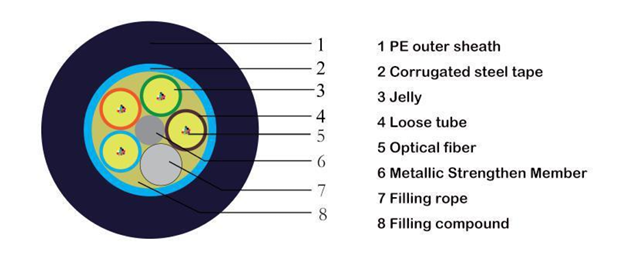
Fiber optic cables are designed for high-speed data transmission using light signals. They come in several categories, including Single-Mode Fiber (OS2), which offers long-distance connectivity and high bandwidth, and Multi-Mode Fiber (OM1, OM2, OM3, OM4, OM5), ideal for shorter distances with high-speed performance. These cables deliver exceptional bandwidth, minimal signal loss, and immunity to electromagnetic interference, making fiber optic cables the preferred choice for data centers, backbone cabling, and large-scale IT networks in Colombo, where reliable performance and future expansion are essential. Using the right fiber optic category ensures optimized network performance and scalability for any business.
1.2 Single-Mode Fiber
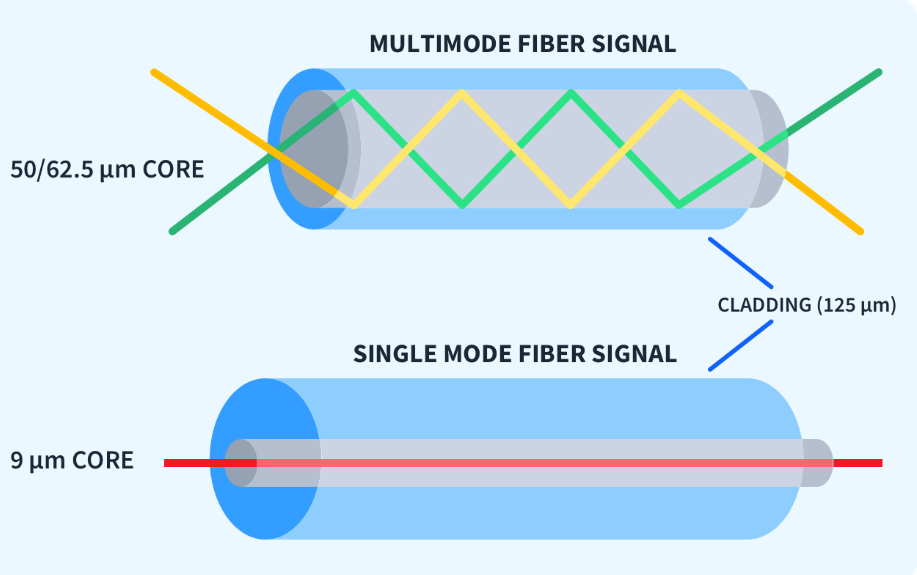
Single mode fiber (SMF) has one core in which light is transmitted, and has far greater transmission distances than multimode. The hallmark feature of single mode fiber is its core size. Single mode fiber has a far smaller core size compared to multimode fiber, measuring in at only 8 to 10 micrometers. The minuscule diameter reduces signal loss, which facilitates long-distance communication.
1.3 Multi-Mode Fiber
Multimode fiber (MMF) transmits multiple rays of light (or modes) simultaneously. It is used primarily to transmit data over short to medium ranges. The maximum distance can vary widely depending on which fiber optics type is used. The four types are OM1, OM2, OM3, and OM4. Multimode fiber optics has a larger core size than its single mode counterpart, generally around 50 micrometers. Due to the relatively large size of the core, incoherent light sources such as LEDs can easily be used to transmit data. LED light emission does not require the same level of precision as single mode.
- Copper data cables
- Structure of the cable
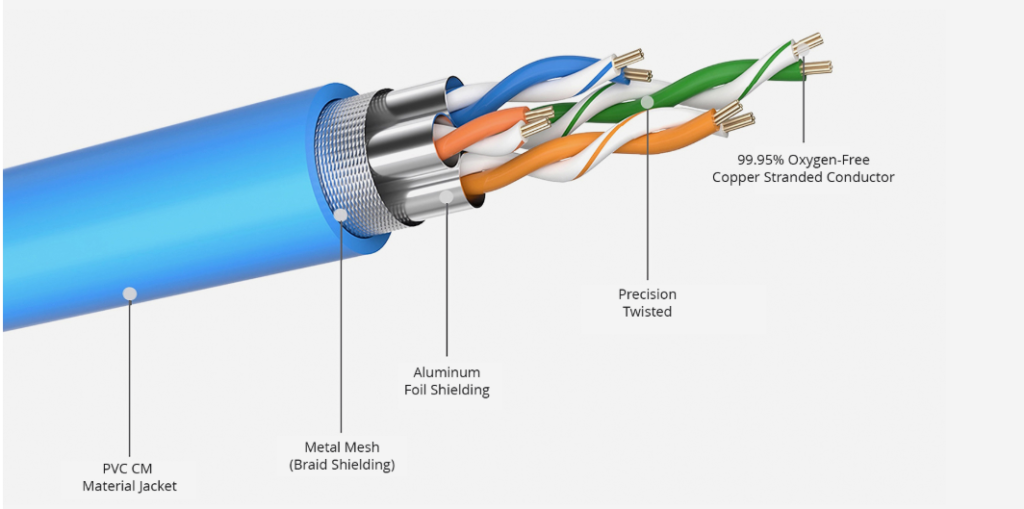
Copper data cables are widely used in structured cabling systems and are available in two main categories: Unshielded Twisted Pair (UTP) and Shielded Twisted Pair (STP/FTP) cables.
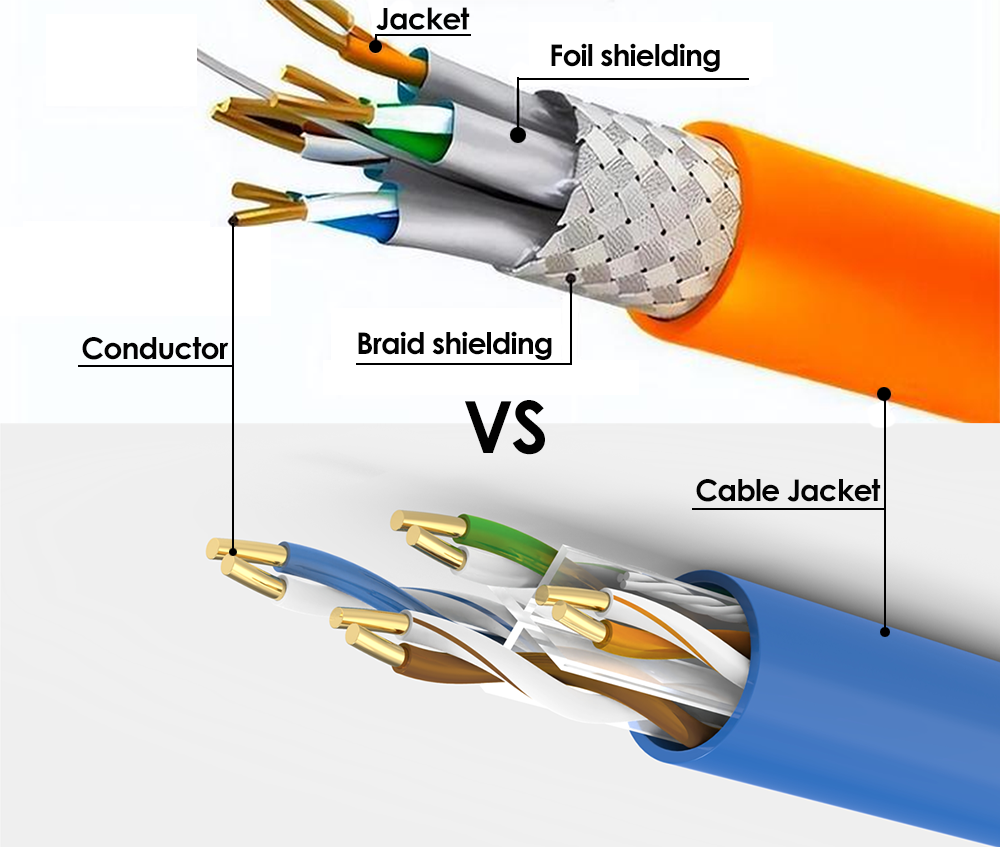
2.2 Shielded VS Unshielded Structure
2.3 Unshielded copper data cables
They are known as Cat5e UTP, Cat6 UTP, and Cat6A UTP which are the most commonly used solutions for office networks, providing reliable data transmission, easy installation, and cost efficiency for LAN networks, Wi-Fi access points, IP phones, and CCTV systems. For environments with high electromagnetic interference.
2.4 Shielded copper data cables
They are included with Cat6 STP and Cat6A FTP cables offer enhanced protection against noise, crosstalk, and signal loss. Both shielded and unshielded copper cables support Power over Ethernet (PoE and PoE+), making them ideal for short to medium distance applications in commercial buildings, data rooms, and enterprise IT networks in Colombo.
Selecting the correct shielded or unshielded copper data cable ensures optimal network performance, stability, and long term scalability.
When comparing fiber optics vs. copper, factors such as speed, distance, installation cost, and future scalability must be considered. While copper cabling offers lower initial costs, fiber optic cabling provides superior long‑term value for growing IT networks in Colombo’s evolving commercial landscape.
At Micro Bytech International, we provide high‑quality fiber optic cables, copper data cables, and complete structured cabling solutions tailored to your business requirements. Our range of certified (lSO/lEC 11801, EN 50173, lEC 61156-5 and IEC 60794-1) network products ensures reliable performance, compliance with industry standards, and seamless integration into modern IT networks.
If your business demands high bandwidth, long‑distance connectivity, and future‑ready infrastructure, fiber optics is the ideal choice. For cost‑efficient and reliable office networking, copper cabling remains a strong solution. Choosing the right structured cabling system today ensures your IT network is ready for tomorrow’s challenges.
